
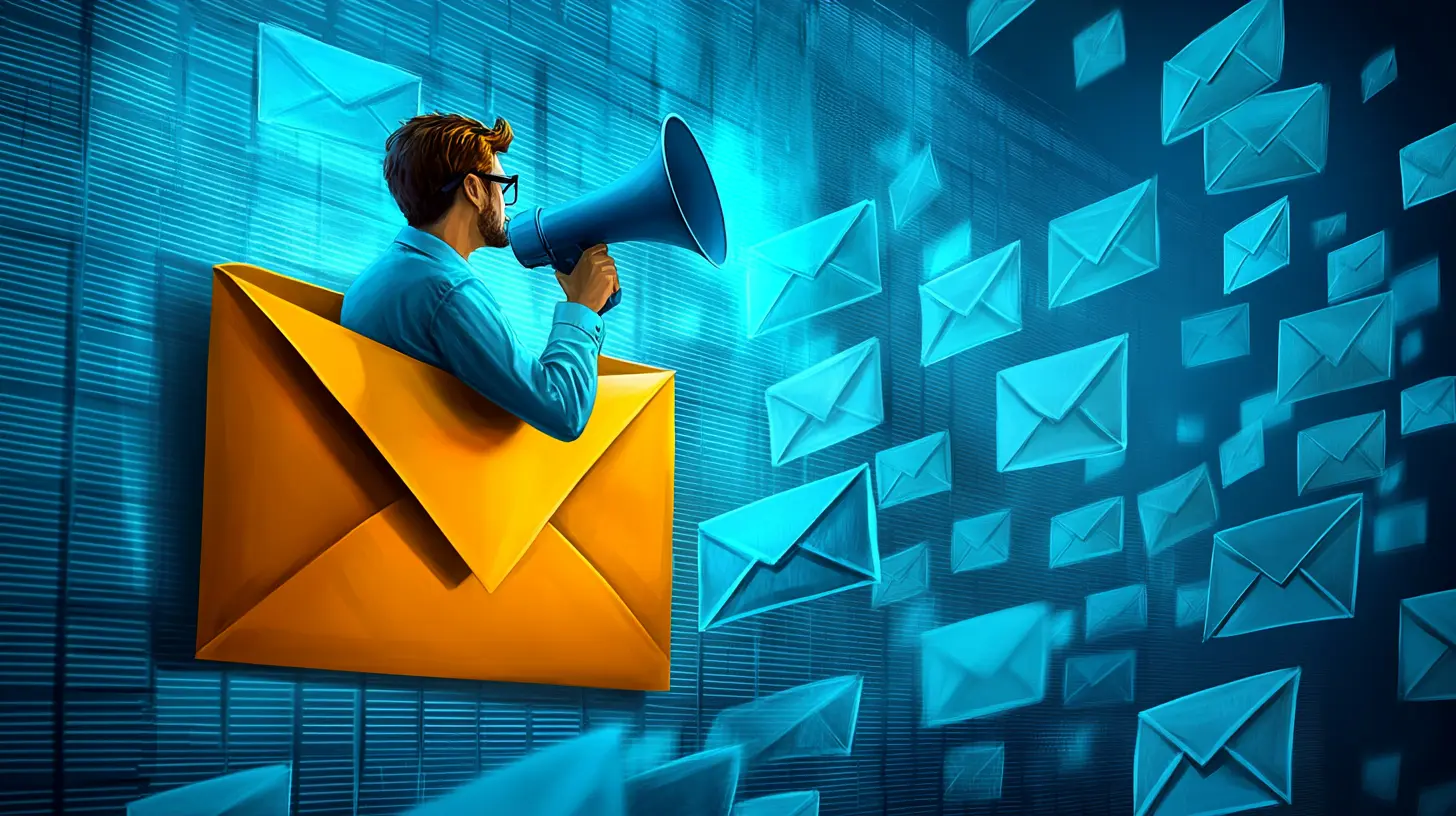

In the fast-paced world of e-commerce, one marketing channel remains your most reliable and profitable asset. Your email list serves as the direct line to your customers. So, it is a channel you truly own. From welcoming new subscribers and recovering abandoned carts to announcing new products and fostering long-term loyalty, a well-executed email strategy is the engine that drives repeat sales and sustainable growth. But the success of that strategy hinges on having the right technology. It can be overwhelming to choose the right platform from a crowded market. So, here are the top email marketing tools to help your e-commerce business thrive in 2025.
Hubspot
While HubSpot is a dominant force in the world of marketing automation, its platform is a poor fit for the specific needs of most e-commerce businesses. At its core, HubSpot is a B2B-centric CRM designed for managing long sales cycles and nurturing leads, not for the fast-paced, product-driven nature of online retail. Essential e-commerce functions like abandoned cart recovery, browse abandonment flows, and dynamic product recommendations are not native to its core architecture, often feeling clunky or requiring complicated workarounds to implement effectively.
However, the most significant drawback is HubSpot’s pricing model. Costs are primarily based on the number of marketing contacts in your database, a structure that becomes prohibitively expensive for your e-commerce brand. This is because e-commerce businesses typically have large lists of customers and subscribers. The powerful automation and segmentation features that are standard in dedicated e-commerce platforms are often locked behind HubSpot’s premium Marketing Hub tiers. This means you end up paying a hefty price for a suite of B2B tools you’ll never use.
If you choose HubSpot as your email marketing tool, you may be overpaying for an overly complex system that isn’t built for your needs. You are better served by a platform designed from the ground up for selling products online.
Mailchimp
While Mailchimp is often the default starting point for new businesses, its reputation as a simple newsletter tool is precisely what makes it a weak choice for a growing e-commerce store. In the competitive landscape of 2025, basic email blasts are not enough. E-commerce thrives on sophisticated automation, and this is where Mailchimp falls significantly short. Its automation capabilities are rudimentary compared to platforms built specifically for online retail. Setting up complex, revenue-driving flows like browse abandonment, post-purchase upsells, or predictive segmentation is either impossible or incredibly clunky.
This lack of e-commerce depth is compounded by a pricing model that offers poor value as you scale. The features that are essential for an online store, such as advanced segmentation and multi-step automations, are locked behind expensive high-tier plans. By the time you can afford them, you could be using a more powerful, e-commerce-native platform like Klaviyo or Omnisend for a similar cost. You end up paying a premium for a generalist tool that lacks the specialized features needed to truly maximize customer lifetime value.
So, Mailchimp is a fine place to start for an e-commerce business, but has too many limitations. If you want to build a serious e-commerce strategy, you’ll need to upgrade to a much better tool in a short time.
Brevo
On the surface, Brevo presents an enticing offer for e-commerce businesses. It offers a full suite of marketing tools, including email, SMS, and chat, at a highly competitive price point. However, for a business focused on growth, this all-in-one approach reveals significant weaknesses that can ultimately cost more than the subscription saves.
Brevo’s primary drawback is its lack of depth in e-commerce-specific features. The automation builder, while functional, is far less powerful and intuitive than those of dedicated e-commerce platforms like Klaviyo. It is also quite a process to create the complex, multi-path customer journeys based on real-time browsing behaviour or detailed purchase history. The user interface often feels less polished and more cumbersome, slowing down the process of creating and managing campaigns.
Furthermore, its integrations with platforms like Shopify and WooCommerce are often superficial. They fail to sync the deep, granular customer data that is essential for the hyper-personalized marketing that drives repeat sales. This means you can’t easily segment customers based on the specific products they’ve viewed or purchased. If you want to maximize customer lifetime value, Brevo’s budget appeal isn;t really worth it. The platform’s limitations will hinder your ability to build a truly data-driven marketing engine, so you should explore further options.
Omnisend
As a dedicated e-commerce marketing platform, Omnisend is a powerful contender that rightly attracts many online businesses. However, despite its robust feature set, it often struggles to step out of the shadow of its main competitor and presents several frustrating limitations. For many data-driven brands, Omnisend can feel like a perpetual runner-up, offering strong capabilities that fall just short of being best-in-class.
Its analytics and reporting, while good, often lack the sheer depth and customizability that power users require to uncover granular customer insights. The segmentation engine is powerful but can be less flexible than rivals when building highly complex, multi-conditional audience segments. This can be a significant compromise for businesses that rely on cutting-edge, data-driven strategies to fuel their growth.
From a usability perspective, the interface can feel less intuitive, with a steeper learning curve than some alternatives. The email and form builders, while functional, are often criticized for being more restrictive, making it a challenge to create a truly unique, on-brand design without wrestling with the editor’s constraints. So, if you want powerful analytics or a polished user experience, Omnisend, while very capable, can ultimately feel like a compromise.
PosterMyWall
Stunning visuals are the key to sales for e-commerce businesses. PosterMyWall offers this, along with a unique and powerful approach to email marketing. Its core strength is a massive library of professionally designed templates geared specifically for the promotional calendar of an online store. Announcing a new collection, a flash sale, or a holiday discount becomes incredibly simple when you have a beautiful, on-brand template ready to go. You just have to set things up and the tool will do the rest. In addition, you can draft the email text as well using the in-built AI Writer. After that, you can send and track your emails without any other tools involved.
A standout feature that sets PosterMyWall apart is its seamless integration of video and animation. This is a game-changer for e-commerce business with their visual nature. The platform makes it effortless to create and embed dynamic GIFs or video previews directly into your emails, a high-impact tactic that dramatically increases engagement and click-through rates. This capability is wrapped in a simple, all-in-one workflow perfect for busy entrepreneurs. So, you can move from creating a beautiful graphic to launching an email campaign in minutes, all within one platform.
PosterMyWall blends a user-friendly design studio with essential email marketing tools. Therefore, it empowers businesses to send emails that not only inform but also captivate and convert.
Ultimately, the goal of any great email marketing tool is to help you sell more and build a bank of loyal customers. So, we’ve given a list of tools that offer a unique pathway to achieving that goal. Your task is to choose the path that best fits your brand’s journey. Whether you’re a startup laying the foundation or a scaling enterprise optimizing for lifetime value, you need to make the right decision.
So, don’t let analysis paralysis stop you. Pick the tool that resonates most with your immediate needs, sign up for a trial, and start building those crucial customer connections today. In the world of e-commerce, the relationship you nurture in the inbox is the foundation for the success you’ll see at the checkout.